


The Ambitious Project
September 15, 2026
Mia and Her Baby Brother
September 18, 2026The Ambitious Project
September 15, 2026Mia and Her Baby Brother
September 18, 2026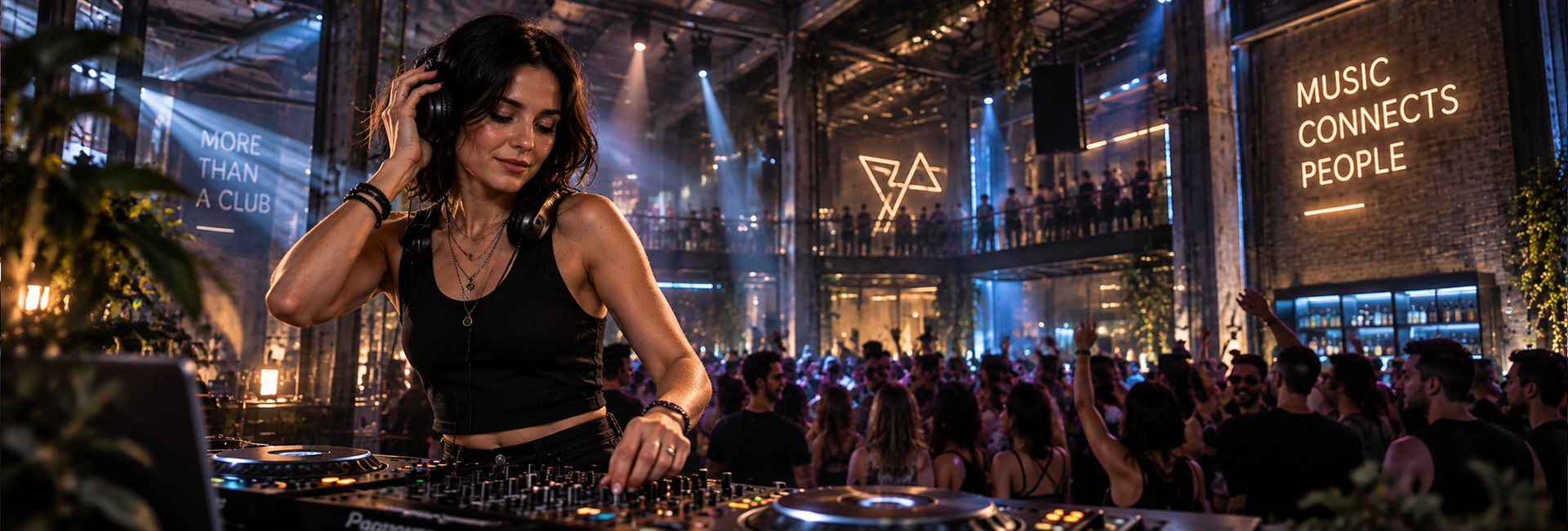
The Visionary’s Dream
Lena had always been fascinated by music, energy, and nightlife. After spending years as a DJ at various clubs around the world, she decided it was time to create her own space, a night club that wasn’t just about dancing but about an immersive experience.
“This will be different,” she told herself. “People will remember it.”
Lena knew that if her vision were to become a reality, she needed more than just a good sound system. The club had to have an atmosphere that would transport people into another world. She began sketching out ideas for lighting, sound design, and even the architecture. Her club would have multiple rooms, each with a unique theme, from neon jungle to futuristic minimalism. The goal was to create a sensory overload, where every detail would contribute to the overall vibe.
After months of searching, Lena found the perfect spot: a large, abandoned warehouse on the edge of the city. It was spacious, had high ceilings, and gave her the freedom to design everything from scratch. The building had a rugged charm with its exposed brick walls and industrial beams, which Lena planned to incorporate into the aesthetic of the club.
Running a night club was not something Lena could do alone. She needed a team of experts in different fields: lighting designers, sound engineers, architects, and event managers. She carefully selected people who shared her vision and passion for creating an extraordinary space.
“We’re not just building a club,” she told them during the first meeting. “We’re building an experience.”
As with any ambitious project, obstacles were inevitable. Halfway through the renovation, the city issued new regulations on fire safety, which meant Lena had to redesign some of the club's layout.
“It’s frustrating, but we’ll adapt,” she told her team, refusing to let setbacks derail her vision.
Budget constraints also became a problem, especially when she insisted on using state-of-the-art sound systems and custom-built lighting rigs. Lena decided to cut back on marketing expenses and rely on word of mouth and the club’s reputation to spread organically.
The grand opening was set for a Friday night in the middle of summer. The anticipation was palpable, and tickets sold out within hours. When the night arrived, Lena stood at the back of the club, watching as the doors opened and people began to flood in. The air was electric, filled with excitement and curiosity. Neon lights bounced off the walls, and the music pulsated through the room, perfectly synced with the custom lighting. It was everything she had imagined and more.
As the night went on, the club became a living, breathing entity. Each room was packed with people dancing, laughing, and losing themselves in the music and the immersive environment. In one room, jungle vines hung from the ceiling, while in another, minimalist laser lights cut through the fog. Lena moved through the crowds, absorbing the energy and occasionally checking in with her staff. She felt a deep sense of pride.
“This is it,” she thought. “This is what I wanted.”
Word about the night club spread quickly. Soon, it wasn’t just locals who were coming. People from neighboring cities began making the trip to experience the club for themselves.
DJs from around the world reached out to Lena, wanting to perform there. She hadn’t expected the success to come so fast, but it was clear that she had tapped into something special.
With the club now thriving, Lena began thinking about the future. She wanted to evolve the space continually.
“We can’t let this become stale,” she told her team. They started hosting themed nights, collaborating with visual artists, and even live performers. The club was more than just a place to dance, it was becoming a cultural hub.
Years passed, but Lena’s night club remained one of the most sought-after spots in the city. It had become iconic, a place where people came not just for the music but for the entire experience. And while trends in music and nightlife shifted, Lena’s club adapted, always staying ahead of the curve. Looking back, Lena knew that creating this space was more than just fulfilling a dream, it was about creating a legacy that would continue long after the lights dimmed.
1 Past Perfect
The Past Perfect is used to describe an action or situation that happened before another past event. It helps make the sequence of past events clear.
Structure: Subject + had + past participle
“Lena had always been fascinated by music, energy, and nightlife.”
Example:
She had worked as a DJ for years before opening her own club.
2 If + Past Simple, Would + Base Verb
This structure is used to talk about an unreal or hypothetical situation and its possible result. It is commonly known as the Second Conditional.
Structure: If + subject + past simple, subject + would + base verb
“if her vision were to become a reality, she needed more than just a good sound system.”
Example:
If she had more space, she would create another themed room.
3 Need + To-Infinitive
“Need to” is used to express something that is necessary or required. It is useful when talking about responsibilities, plans, or actions that must be completed.
Structure: Subject + need to + base verb
“She needed a team of experts in different fields.”
Example:
Lena needed to find experienced designers for the project.
4 Have To / Had To
“Have to” expresses necessity or an obligation. When talking about a necessity in the past, “had to” is used.
Structure: Subject + have to / has to / had to + base verb
“Lena had to redesign some of the club's layout.”
Example:
She had to change the design because of the new safety regulations.
5 Past Continuous
The Past Continuous is used to describe an action that was in progress at a particular moment in the past. It often provides background information while another event happens.
Structure: Subject + was / were + verb-ing
“Lena stood at the back of the club, watching as the doors opened and people began to flood in.”
Example:
She was watching the crowd while the music was starting.
| # | Word / Phrase | Meaning in English |
|---|---|---|
| 1 | Immersive experience | An experience that makes you feel completely involved in a particular environment or activity. |
| 2 | Atmosphere | The overall feeling or mood of a place. |
| 3 | Transport someone into another world | To make someone feel as if they are in a completely different place or reality. |
| 4 | Sensory overload | A situation in which the senses receive more stimulation than they can comfortably process. |
| 5 | Abandoned | Left empty or no longer used by the people who previously occupied it. |
| 6 | Rugged charm | An attractive quality that comes from a rough, unfinished, or natural appearance. |
| 7 | Incorporate | To include something as part of a larger plan, design, or system. |
| 8 | Aesthetic | The particular style, appearance, or visual quality of something. |
| 9 | State-of-the-art | Using the most advanced technology, methods, or equipment currently available. |
| 10 | Obstacle | Something that makes it difficult to achieve a goal or complete a task. |
| 11 | Renovation | The process of repairing and improving a building or space. |
| 12 | Regulations | Official rules that control how something must be done. |
| 13 | Budget constraints | Limits on how much money can be spent on something. |
| 14 | Word of mouth | Information or recommendations passed from one person to another through conversation. |
| 15 | Palpable | So strong or noticeable that it can almost be felt physically. |
| 16 | Flood in | To enter a place in large numbers and usually very quickly. |
| 17 | Pulsate | To move or beat with a strong, regular rhythm. |
| 18 | Thrive | To grow, develop, or succeed strongly. |
| 19 | Cultural hub | A place where many cultural activities, artists, and creative communities come together. |
| 20 | Stay ahead of the curve | To remain more advanced or successful than others by adapting to new developments. |
1. What do you think made Lena’s nightclub different from a traditional nightclub?
2. How did Lena deal with the obstacles and budget problems she faced?
3. If you could create your own unique space, what would it look and feel like?


Learn English Through Short Stories
Improve your English naturally with engaging English stories designed for language learners. Read stories in English, build your vocabulary, learn useful English grammar in context, and improve your reading and listening comprehension through stories.